
'Macro headwinds are rising for Indian equities in the form of rising commodity prices, especially oil, depreciating rupee, fiscal challenges, election-related uncertainty and upside risks to inflation'

The company, which sells every second car in the domestic market, said it expected production and sales to grow between 4 per cent and 8 per cent for the financial year started in April.
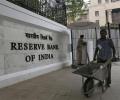
Key risk for price rise is the 'deficient' monsoon that could lead to a pick-up in inflation expectations.

The India Meteorological Department in its first forecast for 2014 had said southwest monsoon will be below normal at 95 per cent of the long-period average.

The economic costs now beginning to show up in the hard numbers are far worse than initial expectations.

Markets taking cue on future rate cuts from RBI policy.

With decline in number of fresh COVID-19 cases and easing of restrictions, the country's gross domestic product (GDP) will grow at 8.5 per cent in FY2021-22, according to credit rating agency Icra Ratings. It expects the gross value added (GVA) at basic prices (at constant 2011-12 prices) to grow at 7.3 per cent in FY2022. "The impact of the second wave of COVID-19 and the ensuing state-wise restrictions was seen across a variety of high frequency indicators in April-May 2021.

Close to half the country is experiencing deficient rains and the shortage for the figure has gone up to 16 per cent.

The correlation between crop yield and expenditure on gold is positive.

The Ayanagar weather station recorded 122.8 mm between 8.30 am on Wednesday and 8.30 am on Thursday, which was 11 times the normal rainfall.

The Santacruz observatory recorded 286.4 mm rainfall during the 24-hour period ending at 8.30 am on Wednesday, making it the fourth highest rainfall in Mumbai since 1974, an Indian Meteorological Department official said.

The wide-based NSE sensitive index is currently hovering around 7,900.
Nearly all the 43 economists surveyed over the past week expect the RBI to leave its key repo rate on hold at 8 per cent.
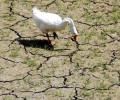
In the first of a two-part series, Business Standard examines the impact of the upcoming summer on agriculture and drinking water supply.
Rating agency Crisil has revised downwards the Indian GDP growth forecast for FY09 to 8.1 per cent, from the earlier 8.5 per cent, in view of the high inflationary conditions, interest rate and global growth outlook.However, despite the growth deceleration, Crisil expects inflation to stabilise at an average 5.5 per cent in 2008-09 in a normal monsoon scenario, the agency said.

The Central Railway has decided to operate its suburban services in Mumbai division on Sunday time table, which means it will ply fewer trains, compared to weekdays when trains are run in full capacity.
The delay in the current year's monsoon rains has heightened uncertainty over India's economic growth and pushed up the risks of a drought, according to a leading independent forecaster.\n\n\n\n
The three weather satellites will improve weather forecasts and will keep a track of phenomena like cyclones and monsoon.

Forecasts of a further rise in bullion prices keep Indians away from selling gold.

Dealers have stocked up vehicles in the run-up to a price hike, which is expected to be announced by leading players some time this month.

For automakers, the festive season is about raking it in through ramped up sales and attractive consumer offers. However, despite the robust demand, what may spoil the party this year is a global shortage of semiconductors.

Here's a look at the water-logging in the city.
The Asian Development Bank (ADB) on Monday lowered India's growth forecast for the current fiscal to 5.6 per cent, from 7 per cent projected earlier, citing falling global demand and impact of delayed monsoon on agricultural production.

Ratings agency ICRA on Wednesday revised downwards growth forecast for the domestic passenger vehicles industry to 8-11 per cent in the ongoing fiscal from the earlier estimate of 14-17 per cent on account of the ongoing semiconductor shortage. Similarly, for the two-wheeler segment, it said the volumes are expected to contract by 1-4 per cent in FY2022 against an earlier prediction of 6-8 per cent growth as affordability and demand sentiments of target clientele was hit sharply by the second wave of COVID-19 pandemic. With around 5 lakh units of production lost by various automakers in the passenger vehicles segment due to the semiconductor shortage, ICRA said the earnings loss for the OEMs (Original Equipment Manufacturers) could be around Rs 1,800 crore to Rs 2,000 crore for the ongoing fiscal.

Auto sales, particularly of two-wheelers, may not bounce back immediately and may take another two months to come back on track even as car bookings have started seeing an initial uptick. Various states started Unlock 2.0 on Monday, following a fall in the number of Covid-19 cases. Auto sales were hit in May following the impact of Covid-led lockdowns.

There will be pressure on the fiscal situation, especially at a time when the monsoon can also disappoint. More populist expenditure is on cards if the mandate is a hung Parliament or a coalition government.

The employment situation remains dire. Whatever can be done to promote greater low-skill employment should be pursued aggressively, advises former chief economic adviser Shankar Acharya.

Hailstorms may cause Rs 12k-cr crop damage, El Nino a bigger worry.
Even as the World Bank has revised India's growth figures by 0.4 percentage points as compared to its January forecast, India remains the fastest growing major economy in the world, the World Bank officials said.
UN body Food and Agriculture Organisation (FAO) has revised upwards India's rice production to 100 million tonnes (MT) in the 2012-13 crop year on the back of revival of rains in August and September.

The country's growth rate is expected to pick up in the second half of this fiscal and reach 6.7 per cent for entire 2012-13, Prime Minister's Economic Advisory Council Chairman C Rangarajan said on Monday.
While efforts are being mounted on a war footing to arrest its spread, COVID-19 will impact economic activity in India directly through domestic lockdown. The second-round effects, it said, would operate through a severe slowdown in global trade and growth.

In 7 days, the index has gained 1,359.23 points.
Flood situation in TN, Karnataka, West Bengal grim

RBI's latest rate cut is positive for the economy.

Inflation target remains 5% for January 2017.
The RBI has targeted consumer price inflation at 6 per cent by January and 4 per cent by March 2018.

Extreme rainfall that occurred in Tamil Nadu is "highly localised" and is part of the natural variability of the monsoon system and its attribution to global warming is "not established", the Rajya Sabha was told on Monday.
Maintaining its growth forecast for the Indian economy at 7.6 per cent for 2011-12, financial services major Citigroup on Monday said higher farm output is expected to offset sluggishness in the industrial sector.
